
Over recent years, I’ve had the privilege of working closely with mothers seeking sanctuary in Wales—women who have fled conflict, persecution, or instability in search of safety and a better future for themselves and their children. My research has concentrated on their experiences of education and learning, and how these experiences influence their identities, wellbeing, and sense of belonging in a new country.
Educational Barriers: Misinformation and Misrecognition
One of the most important findings from my research was how much educational barriers come from misinformation and misrecognition. Many women I spoke to had received incorrect or incomplete information about their rights and how to access education. Others were misjudged, seen through narrow or deficit-based views that failed to recognise their previous qualifications, professional experiences, or ambitions. These barriers are not just frustrating; they are profoundly harmful. They often lead to exclusion from educational opportunities, which in turn impacts mental health, self-esteem, and job prospects. For mothers, the effect is even greater, as their ability to access education directly influences their capacity to support their children and contribute to their communities.
Learning as a Social and Identity-Rebuilding Process
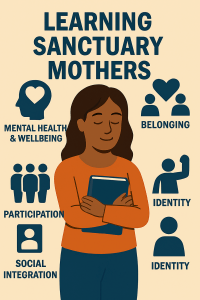
Despite these challenges, I also observed the transformative power of both formal and informal learning. For many of the women I worked with, learning was not just about acquiring knowledge; it was a social process through which they reconstructed their identities and fostered a sense of belonging. Community-based learning environments were particularly influential. These spaces offered more than education; they provided connection, solidarity, and recognition. Through shared experiences and mutual support, the women began to see themselves not just as asylum seekers or refugees, but as learners, professionals, and community members. This shift in identity was often accompanied by greater confidence, improved mental wellbeing, and renewed hope for the future.
Recommendations for Policy and Practice
Based on these insights, I’ve developed several recommendations to improve educational access and outcomes for mothers seeking sanctuary:
- Cross-sector collaboration: Organisations working in education, health, social care, and refugee support need to collaborate more effectively. Integrated approaches can help ensure that women receive accurate information and holistic support.
- Information-focused services: There is a clear need for services that prioritise clear, accessible, and culturally sensitive information about educational rights and opportunities. These services should be co-designed with sanctuary seekers to ensure they are relevant and impactful.
- Recognition of prior learning and experience: We must develop systems that recognise and validate the qualifications and professional experiences that sanctuary-seeking women bring with them. This recognition is essential for enabling meaningful participation in education and employment.
From Research to Action: My Practical Steps Forward
Translating research into action has been a central commitment of mine. Several initiatives have emerged directly from this work:
- Dedicated community courses: I’ve been involved in teaching asylum seekers and refugees on community-based courses that focus on pathways into key sectors such as education, health, and social care. These courses are designed to be accessible, empowering, and aligned with participants’ career goals.
- Support for progression: I actively support students to apply for voluntary roles, paid employment, and further education. This wraparound support helps bridge the gap between learning and livelihood.
- Building professional relationships: I’ve worked to strengthen ties between organisations, such as the Voices Network and Cardiff University, fostering collaboration and shared learning. These relationships are crucial for sustaining change and amplifying impact.
- Advocacy and dissemination: I continue to share my findings and recommendations with relevant organisations, policymakers, and practitioners. Advocacy is an ongoing process, and I remain committed to ensuring that the voices of sanctuary-seeking mothers inform decision-making at all levels.
- Strategic leadership: Building on this research, I’ve assumed trustee roles with two charities, one centred on maternity services and the other a think tank. These roles enable me to contribute strategically, using research insights to influence policy and practice in ways that support sanctuary-seeking women and their families.
Toward a More Inclusive Future
Education serves as a vital lifeline for mothers seeking sanctuary in Wales. Investing in systemic change and listening to their voices will not only empower these women but also foster a more inclusive, compassionate society. By prioritising opportunity, dignity, and hope, we can transform sanctuary from mere safety into a foundation for lasting growth and resilience.
 Research Stories